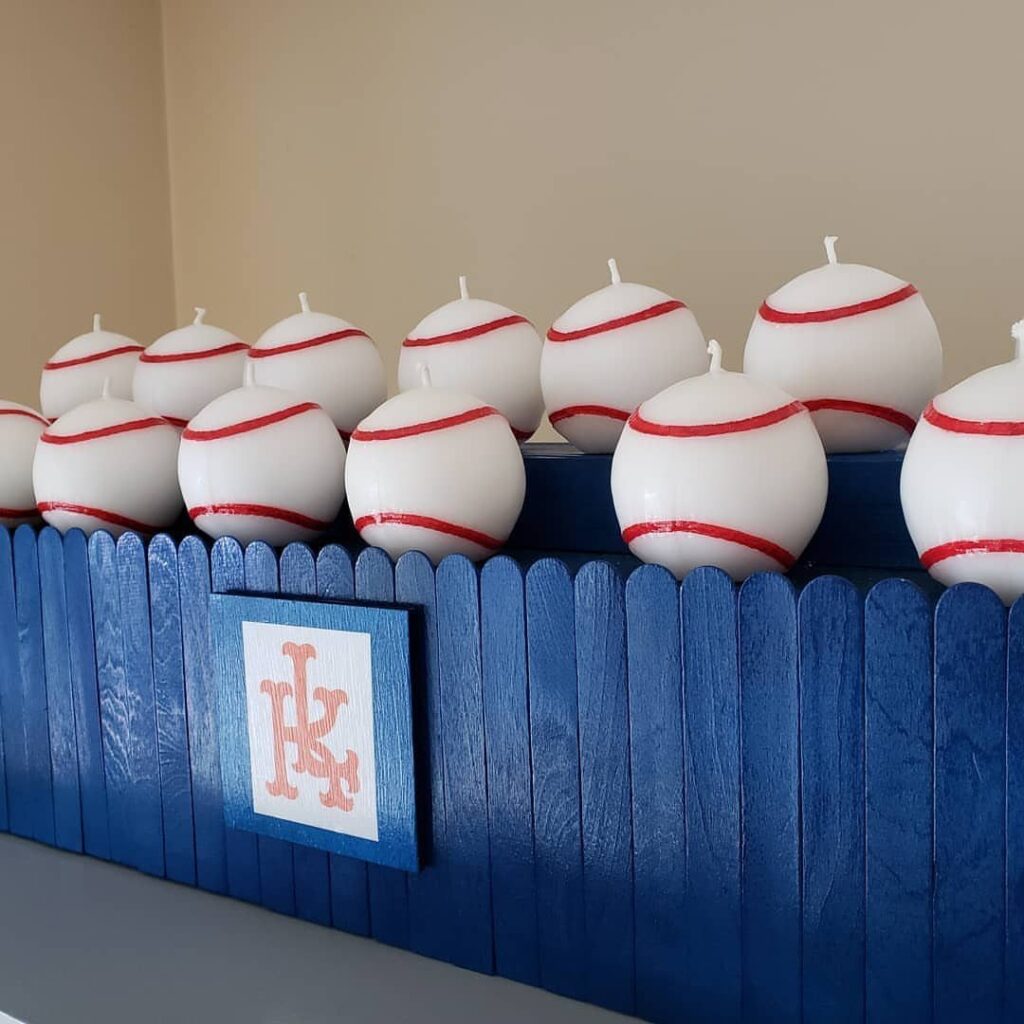
4 ways to set up the candles run from floating votives in colored water to custom photo prints, and what decides between them is how much lead time you have: printed candles need weeks of ordering time, while twine-wrapped pillars and floating displays can be assembled days before the party.
Style comes second, whether that means pillars wrapped in twine and hung with charms, floating candles in colored water, or photo-printed cylinders showing family snapshots.
Whichever you pick, the honoree list and the speeches carry the ceremony more than the candles do.
1. Themed Candle Displays

Letter cylinders that spell the guest of honor’s name turn a plain candle lighting into a themed centerpiece.
Pick one color family, say blue and white, and run it through the balloons, the cake and the glass candle holders so the display reads as one set piece.
Name letters work best when the candle lighting happens right at the dessert table, so the display doubles as the backdrop for photos. A short name like JOSHUA fits one row; a longer one may need two.
2. Photo Personalized Candles
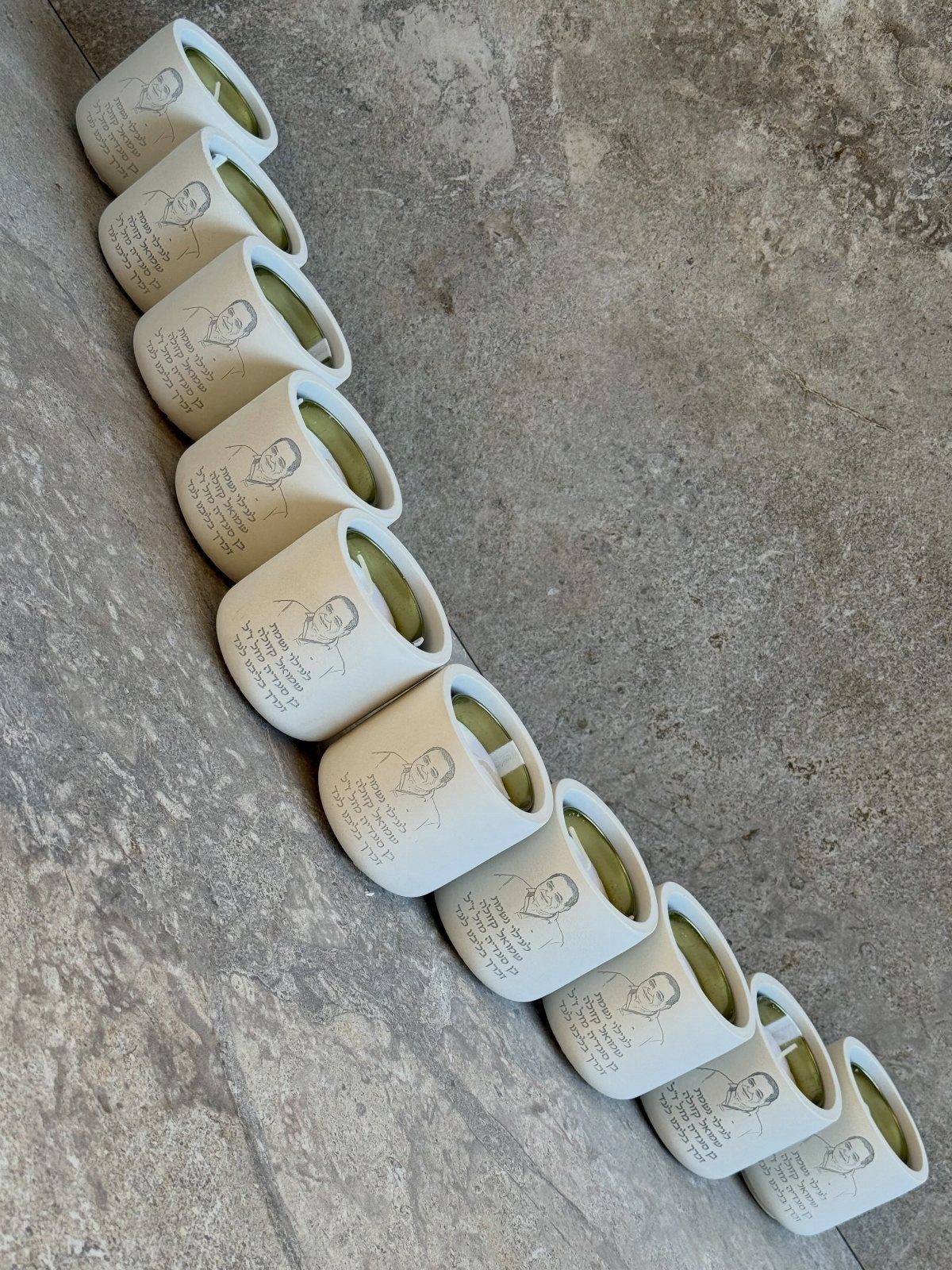
Printing a photo and a line of Hebrew on each small white pillar candle makes every flame about a person. Thirteen candles, one for each year, can sit in a gentle arc so the lighting reads as a timeline.
I would use one photo per candle, from baby years to now, and print the Hebrew on every candle so the set matches. Order the candles well ahead, since custom printing is not something to rush.
3. Rustic Twine and Charm Candles
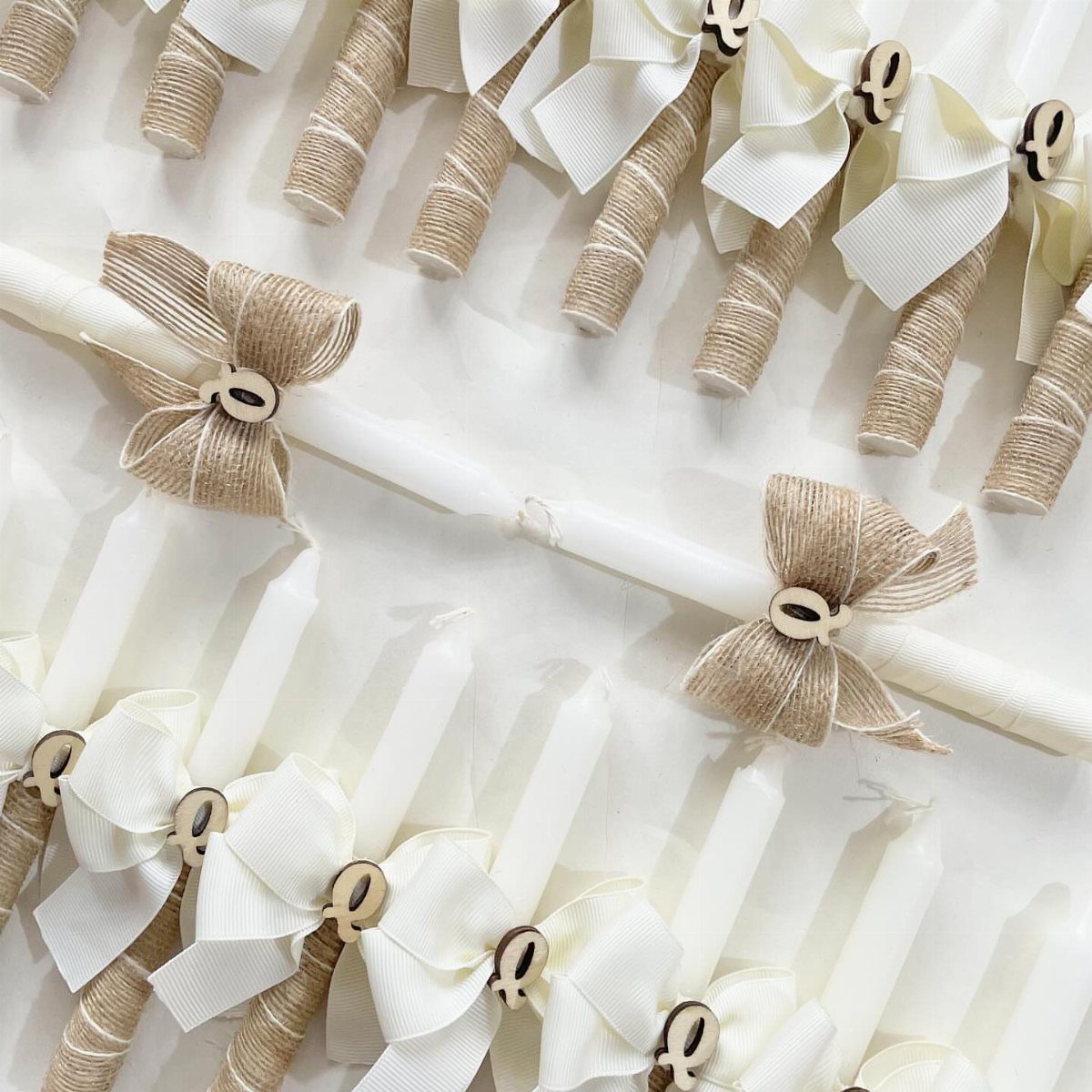
White pillars wrapped in tan twine, layered with white and tan ribbon, are my pick for a relaxed, handmade look. Small circular charms tied on at the end give each candle a bit of personality.
This one is easy DIY: wrap, knot, tie on a charm.
Let each guest or family member get a charm that means something, such as an initial or a symbol. Plain twine and ribbon keep the cost low.
4. Floating Candles in Colored Water
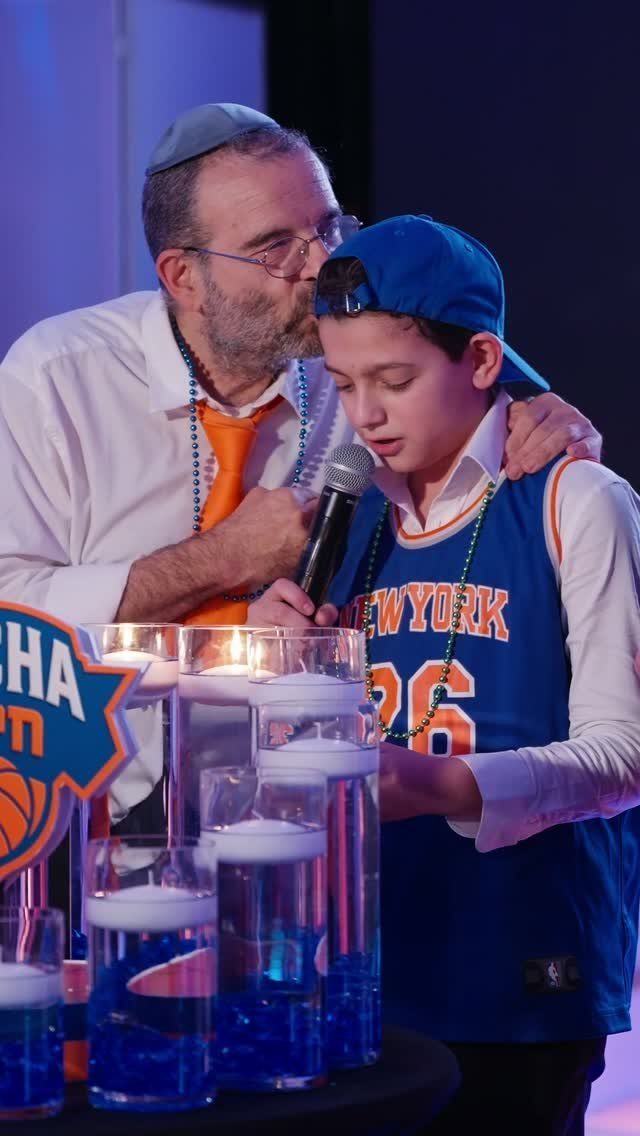
Tall glass cylinder vases filled with blue water and topped with floating white candles look clean and bright, and the sports-loving kid can match the color to his team.
Fill each vase nearly to the top so the candle sits close to the rim and is easy to light.
Stand a row of them on a table near the family so the glow shows up in photos. Add a sign or name card in front for a finished look.
Choosing Honorees
Spread the honorees across generations. Grandparents, aunts, uncles and cousins give the lighting depth and honor the family’s legacy, and a few friends keep it from feeling stiff.
Friends can be close ones, school friends, or even a sports team, and they bring humor and lightness. Mentors such as teachers, coaches and spiritual leaders let the ceremony recognize the child’s personal and academic growth.
If someone has died, a candle in their memory can make the moment reflective. Use it only where it fits your family.
Keep feelings from running the list. Pick honorees by who has actually shaped your child’s life, since a name that means something to the family gives the whole ceremony its weight.
Usually a grandmother does not add a candle for grandchildren. After lighting the candles it is an auspicious time to pray for your children, grandchildren, and anything else on your mind.
Tips for Engaging Guests
Alternate between heartfelt dedications and playful ones. A ceremony that stays serious from start to finish loses the room, and one that stays silly loses its meaning.
Ask each honoree for an inside joke or a short funny anecdote, and tuck it into their moment. A single light line is enough to reset the energy before the next emotional turn.
Have every honoree standing ready before their candle is announced. Dead time between names drains the energy faster than anything else.
Writing Meaningful Speeches
Match the tone to the relationship. For parents and grandparents, I’d write the warmest tributes, built around a childhood memory or a family milestone they were part of.
Friends get the lighter version: times you spent together, favorite activities, funny moments.
A mentor’s tribute can thank them for guidance at school, on the team or in an activity, and a light joke works if that person would enjoy it.
Keep the flow tight, with no pauses between candles and smooth handoffs from one speech to the next.
Give the DJ or band a short list in advance so each honoree gets a song that suits their personality or their bond with your child.
If you’re running a slideshow or video, time the images to each speech so the two work together.
Frequently Asked Questions
What is a candle lighting ceremony?
It is a moment at a bar or bat mitzvah party when the child honors important people in their life by having each one light a candle.
Most families treat it as a custom rather than a religious obligation. Each honoree usually gets a few words, such as a memory, a joke or a thank you.
How many candles are typically lit?
The usual count is 13, each one assigned to a different person the bar mitzvah boy or bat mitzvah girl wants to honor.
That count also lets you arrange the candles in an arc and treat the lighting as a timeline, with a photo for each year.
Who should light the candles?
Spread honorees across generations: grandparents, aunts, uncles and cousins, plus a few friends and mentors like teachers or coaches.
Choose people who have actually shaped your child’s life rather than going by obligation. A candle in memory of someone who has died can be added if it fits your family.
Why do we cover our eyes when lighting Shabbat candles?
The eyes are shielded with the hands while the blessing is said, and the candles are uncovered and looked at afterward.
Sephardic custom differs slightly, with some saying the blessings before lighting. The time of lighting is also seen as a good moment for private prayer, which is traditionally done with eyes closed.