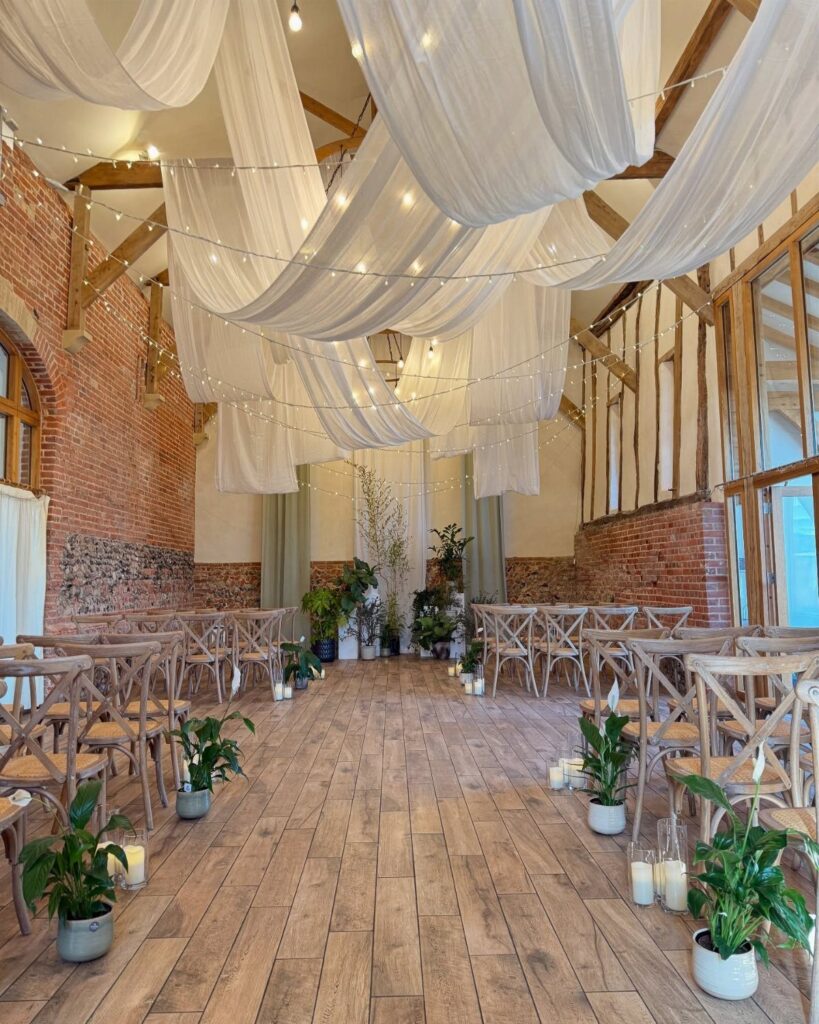
The ceiling you’re draping decides the idea more than the style does: a big open room needs long runs of sheer fabric, while a gazebo, an arbor or a set of barn beams already has a frame and only needs soft cloth looped over it.
The 17 ideas run from budget tulle with fairy lights to chandelier cascades, and the hanging hardware matters in every one of them.
Panels sold as a 2-pack at 5ft x 40ft suit big rooms, so measure your space first and check the length against your ceiling height.
1. Soft, Flowing Fabric Ceiling Drapes
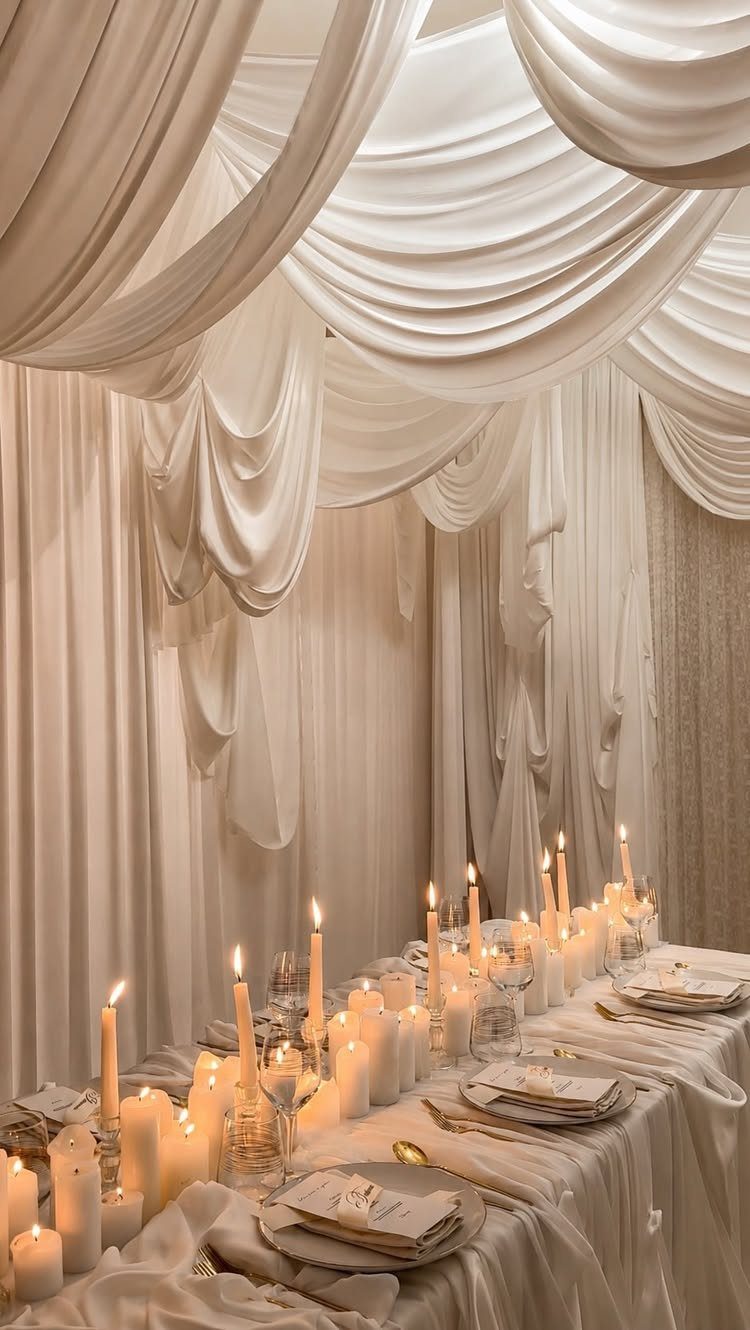
Plain white fabric does the most work when it runs continuously from ceiling to wall, because the room reads as one soft shell instead of a ceiling with decorations on it.
Candles on the table then become the only light source worth looking at.
Chiffon or voile gathers in loose folds and moves with a little air. Stiffer cotton sheeting looks heavier and costs less per yard.
I’d keep the palette to white and nothing else, and let the table carry the detail.
2. Sheer Tulle Ceremony Canopy with Lights
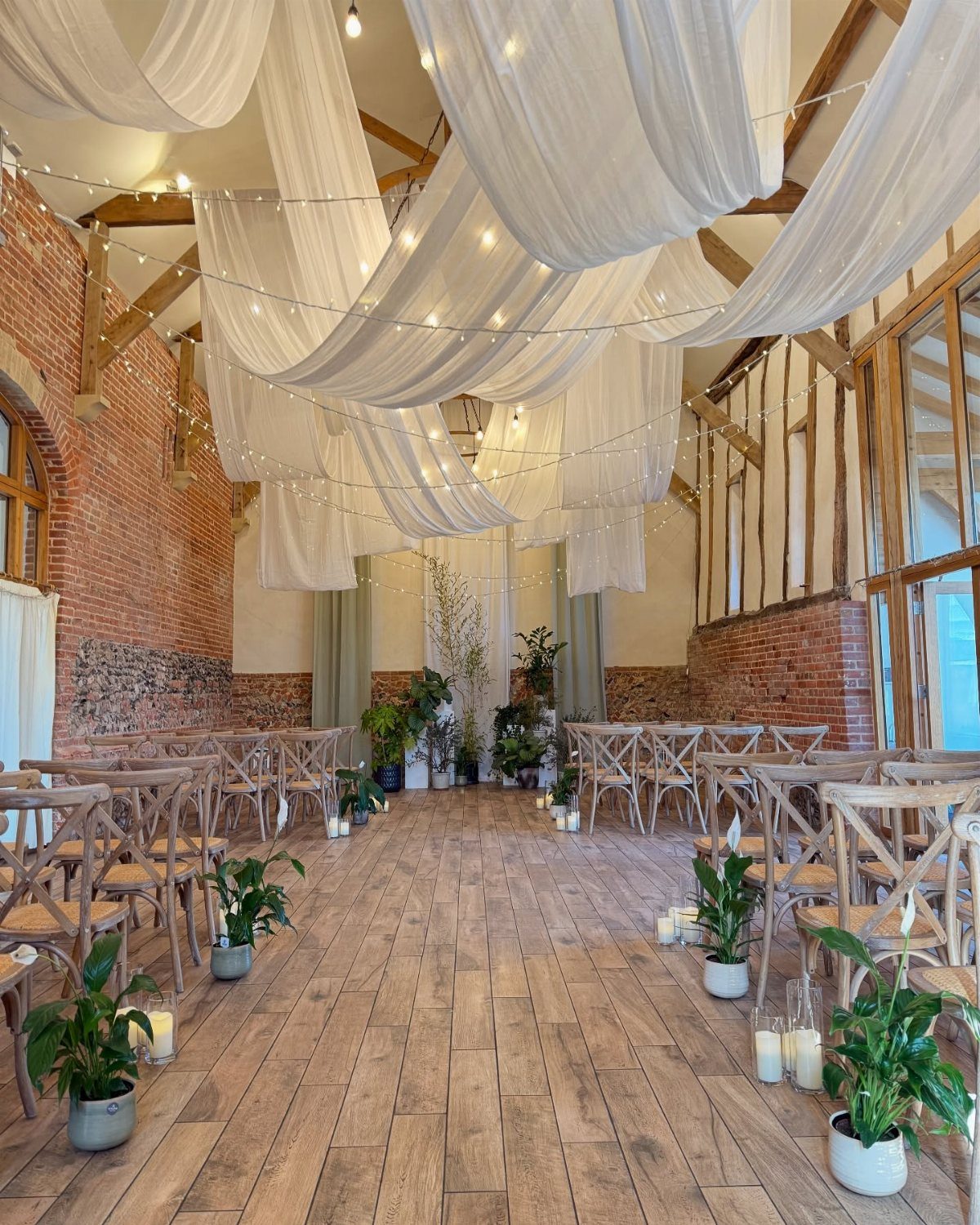
Tulle over an aisle works because it is light enough to hang in waves without sagging, and fairy lights tucked into the folds give the ceremony a glow that suits brick and wood.
Keep the tulle sheer so the lights show through it.
Hang the fabric in swags rather than pulling it taut. Slack looks intentional; tension looks like a mistake.
Test the lights before the fabric goes up, since untangling a dead strand from tulle is slow work.
3. Dramatic Staircase Swags
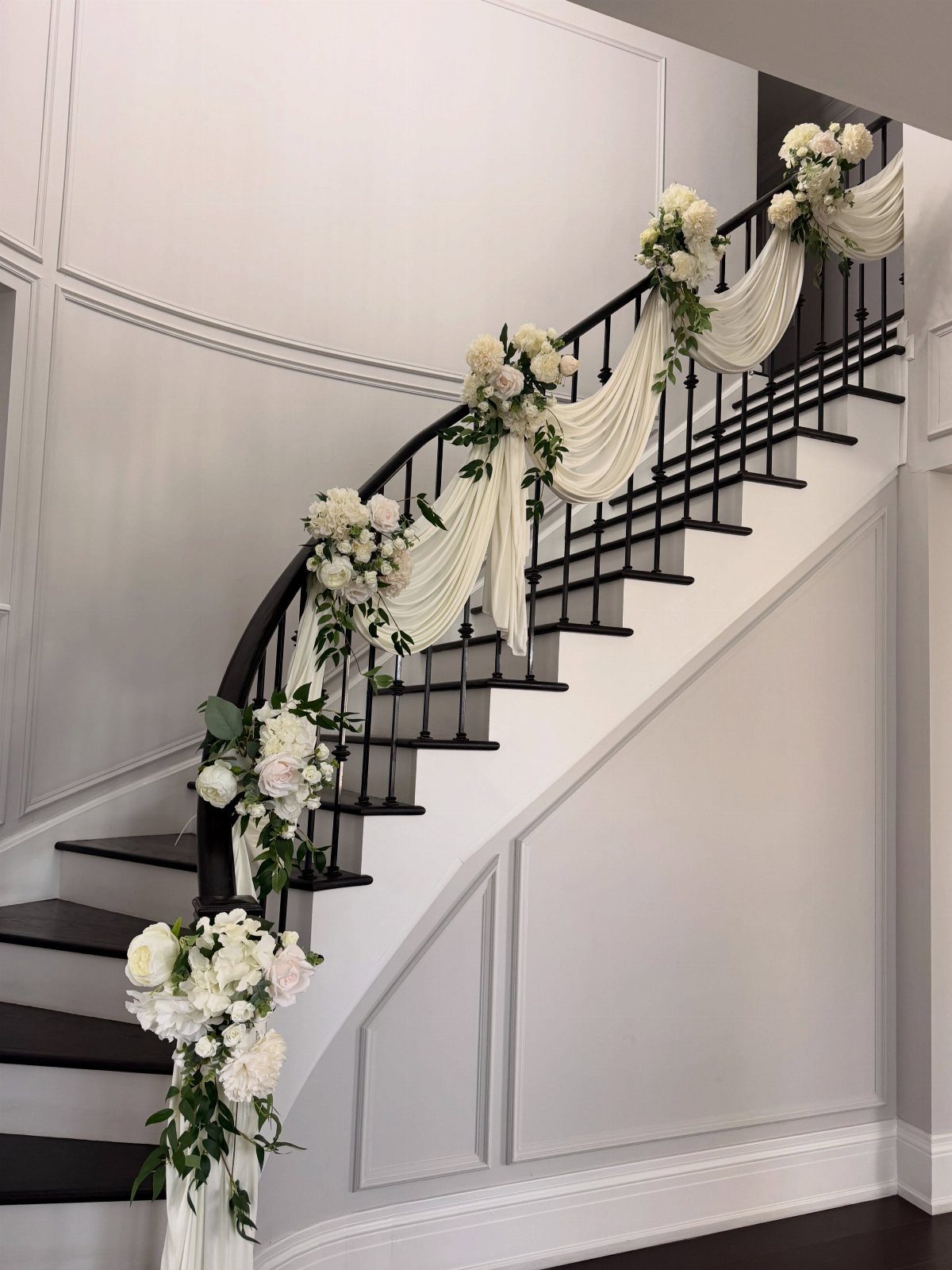
A staircase is already a built-in focal point, so a few swags of fabric along the railing finish it quickly.
White fabric against a black railing gives strong contrast, and floral clusters at the dips keep the swags from looking limp.
Pin or tie the fabric at even intervals, then let each span drop on its own. I’d set the flowers last, once the drape depth is settled.
This is a good option for entrances where guests pause for photos.
4. Luxe Drapery Lounge Enclosures
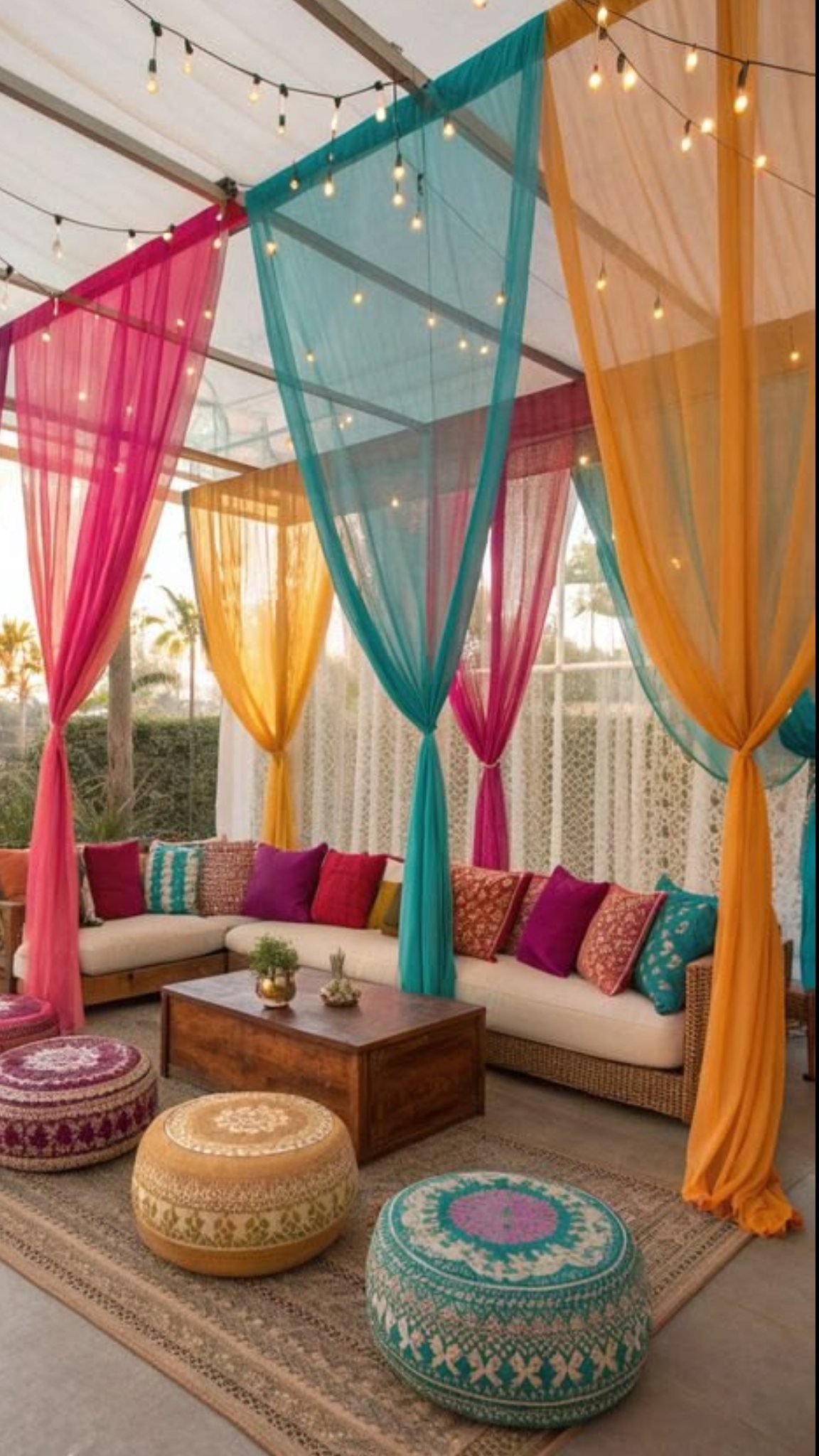
Color is the draw here, and light fabric keeps the enclosure glowing instead of closed in.
Choose one anchor piece, like a sectional, and let the panels frame it on all sides. String lights overhead make the corner feel like the place to sit and talk.
I’d use this for a quiet spot away from the dance floor, where guests can sit down for a while.
5. Floating Tent Ceiling Drapery
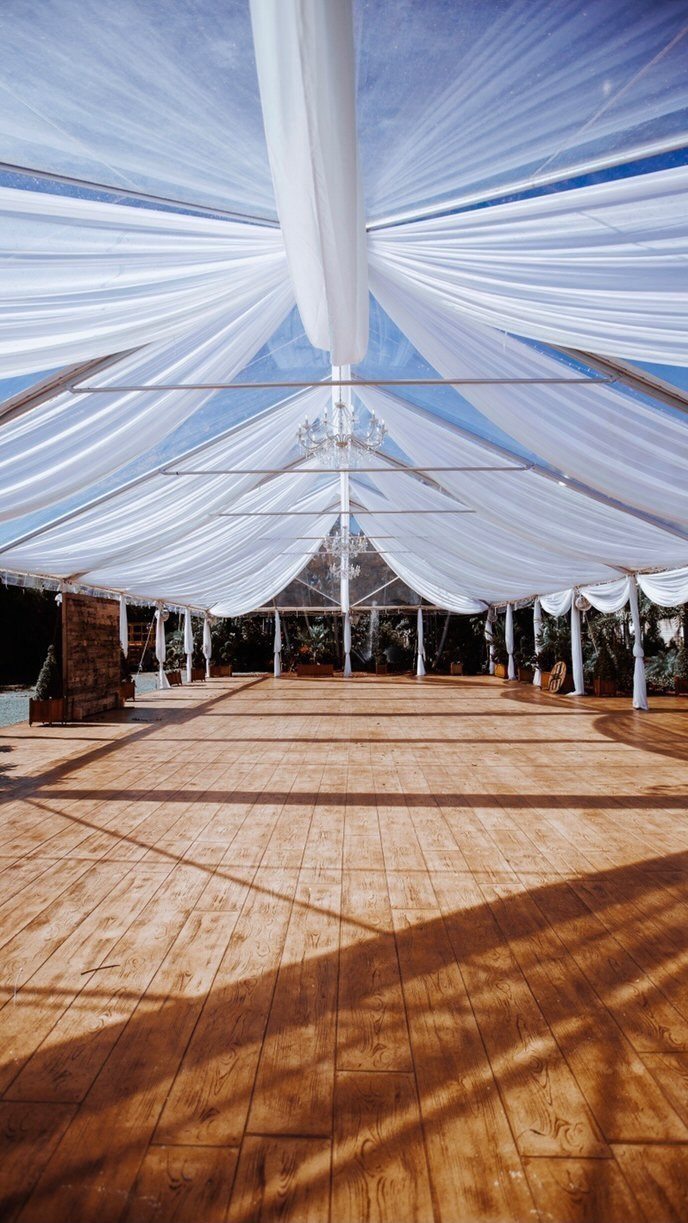
A clear-top tent shows the sky, but fabric under the roof gives it a ceiling that feels finished. Sheer white panels hide the poles and frame, and a chandelier hung at the center ties it together.
Run the fabric from the peak outward in even sections so the folds look planned. Light, airy material suits a clear roof; heavy fabric would block the very view you chose the tent for.
Ask your tent rental company where you can attach hardware before buying anything.
6. Overhead Maypole Draping
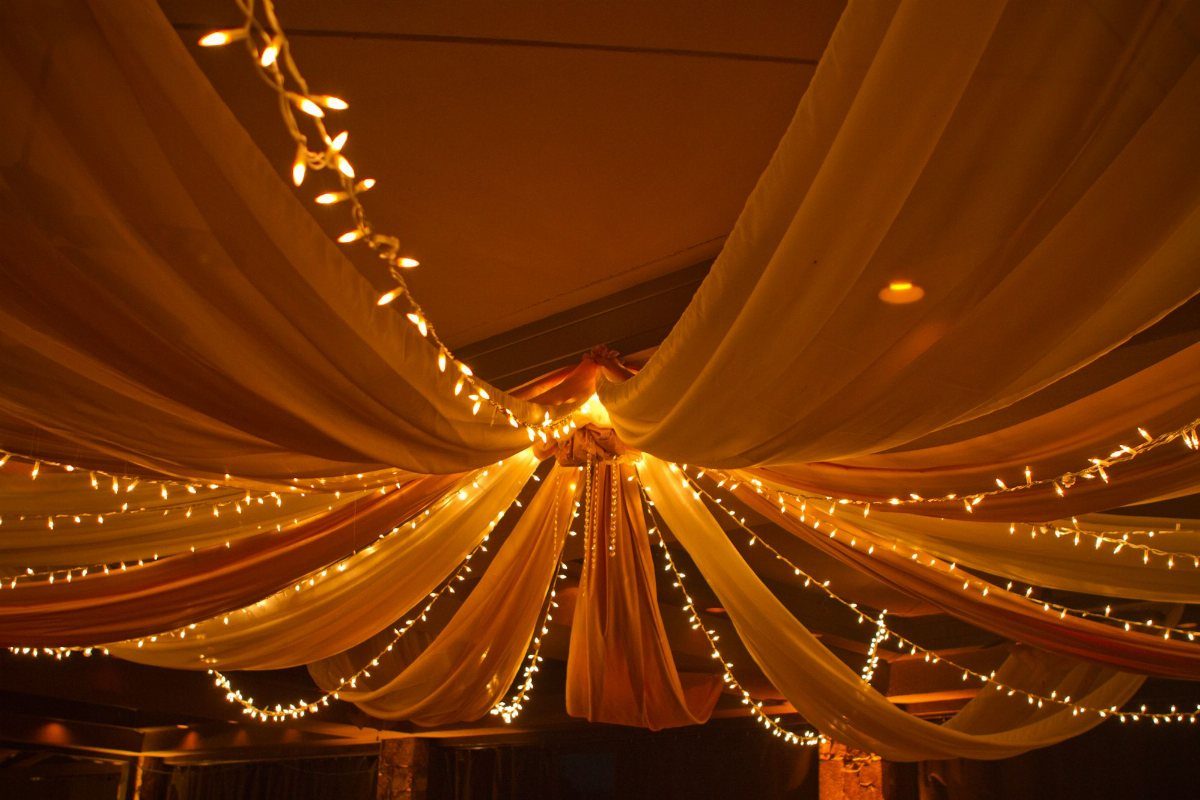
Panels fanning out from one center point make a ceiling look like a canopy, and warm string lights woven between them add soft sparkle. Cream and peach together read gentle rather than loud.
Fix every panel to a single ring or hook at the center, then pull each one out to its anchor around the room’s edge. Space them evenly, or the radiating shape turns lopsided.
I prefer fewer, fuller panels over many thin ones; they look more expensive.
7. Tulle Draping with Greenery Accents
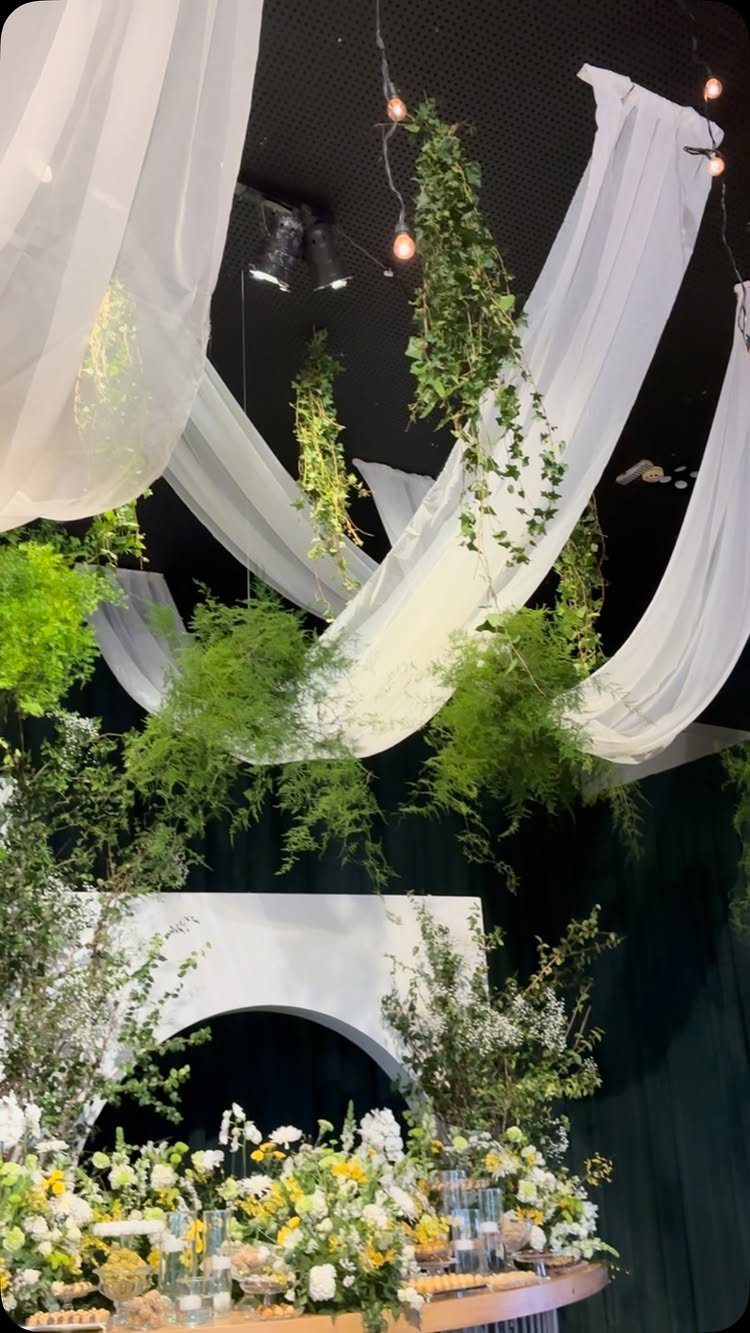
Greenery turns tulle from pretty to grown-in. Vines hanging through white fabric soften the edges of the fabric and give the ceiling some depth, and warm fairy lights make the leaves glow.
Run the vines through the tulle after the fabric is up, letting some trail lower than others. Uneven lengths look natural; a straight, even fringe looks like a curtain.
I’d keep the flowers below in white and yellow and let the green overhead do the rest.
8. Ceiling Cascades with Chandeliers
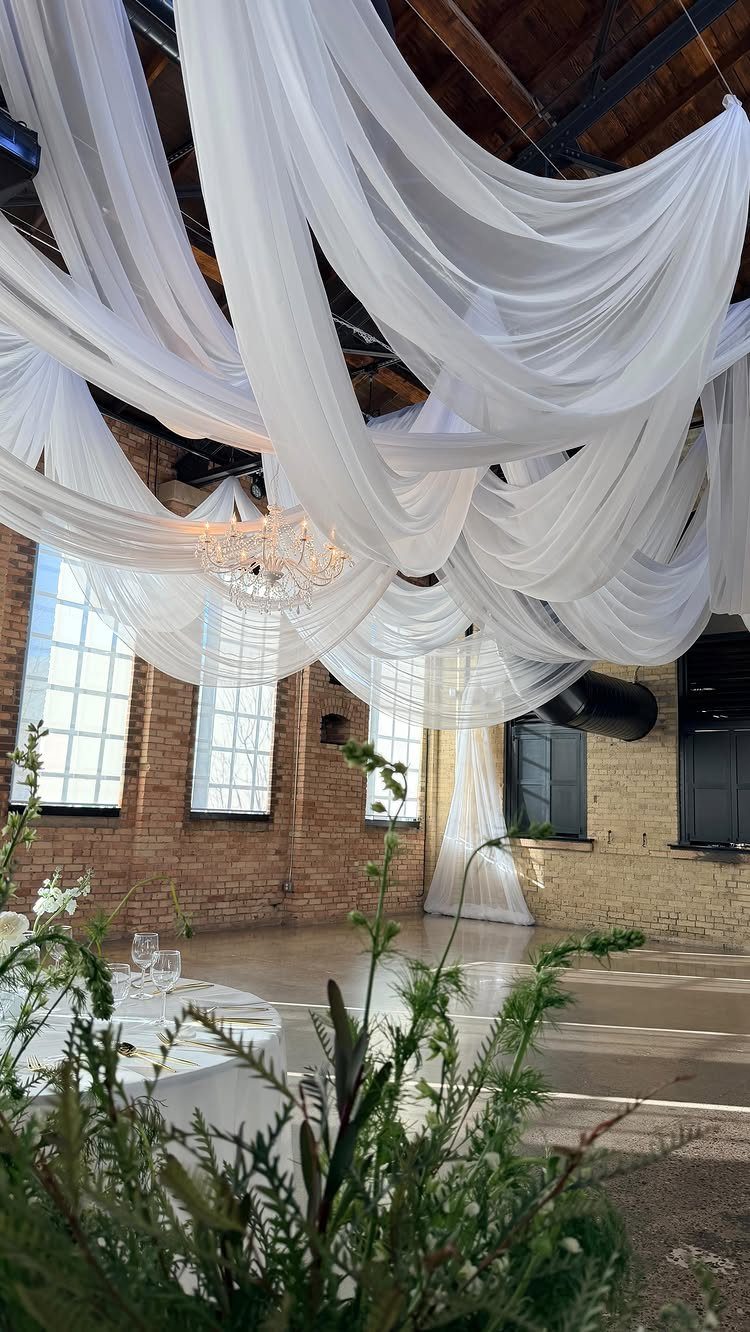
A crystal chandelier does its best work when the fabric rises toward it. Cascading drapes pull the eye up to a high ceiling, and the chandelier catches whatever light comes through the windows.
Brick walls and a set dining table already give the room texture, so I’d keep the fabric plain white.
Hang the cascades from the ceiling in long, uneven drops, and hang the chandelier last so it stays clear of the folds.
Check the ceiling height first. The effect needs room to fall.
9. Sheer Gazebo Draping
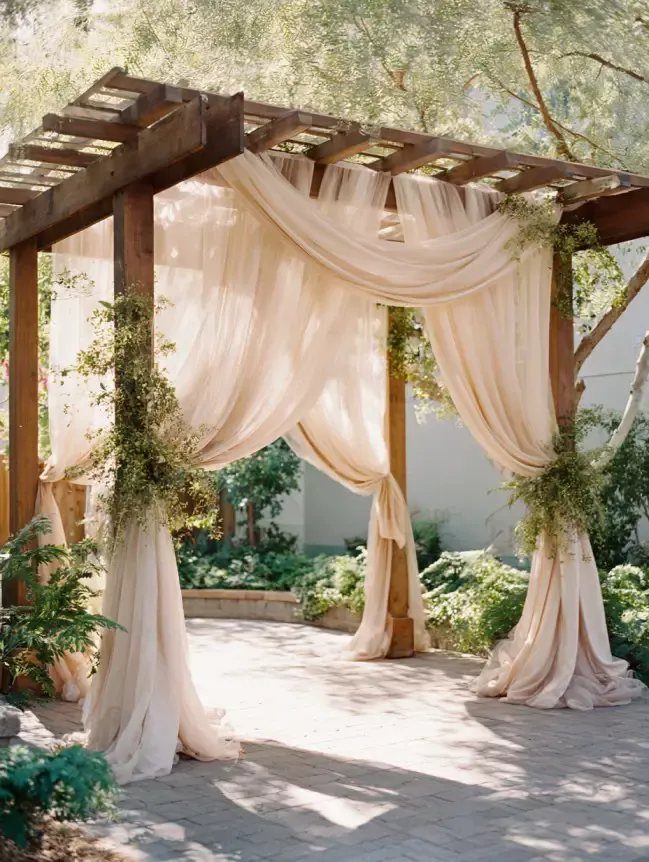
A wooden gazebo or pergola already has a frame, so sheer cream fabric only needs to soften it. The material moves in a breeze, which is the whole appeal outdoors.
Loop the fabric over the top beams and let the ends hang loose at the sides. Tuck green foliage along the edges where the fabric meets the wood, so the structure looks grown into the garden.
Cream suits wood and leaves better than stark white does, and I’d choose it here.
10. Arbor Draping for Outdoor Settings
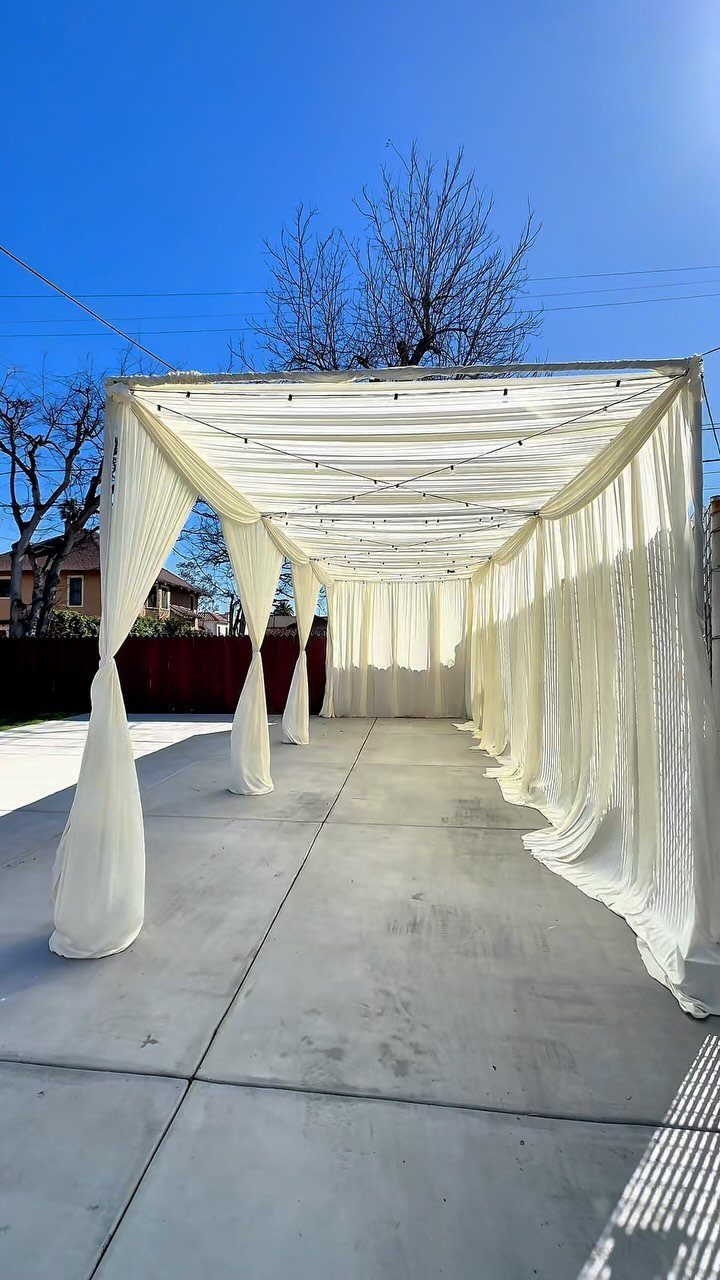
An arbor is the cheapest way to give an outdoor ceremony a ceiling. White sheer fabric over the top and sides turns a bare frame into a canopy, and string lights add a glow once the sun drops.
Mix a smooth sheer with a more textured fabric so the drape has some depth against a plain concrete patio. I’d secure the fabric at the top corners first, then let the ends fall.
Hang the lights before the fabric goes on.
11. Multi-Colored Fabric Panels with Lights
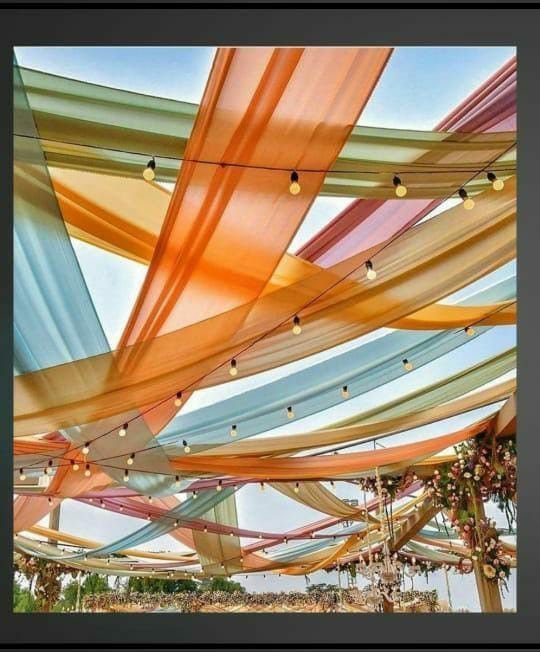
Orange, blue and green panels give an outdoor ceiling real color, and string lights keep the mix from looking heavy. Keep every panel sheer so light passes through and the colors glow.
Gather all the panels at one center point, then pull each out toward the edge of the space. Alternate the colors rather than grouping them, so no single shade takes over.
Florals underneath, kept simple, let the fabric lead. This idea suits couples who want a bolder look than white.
12. Radiating Canopy with Centerpiece
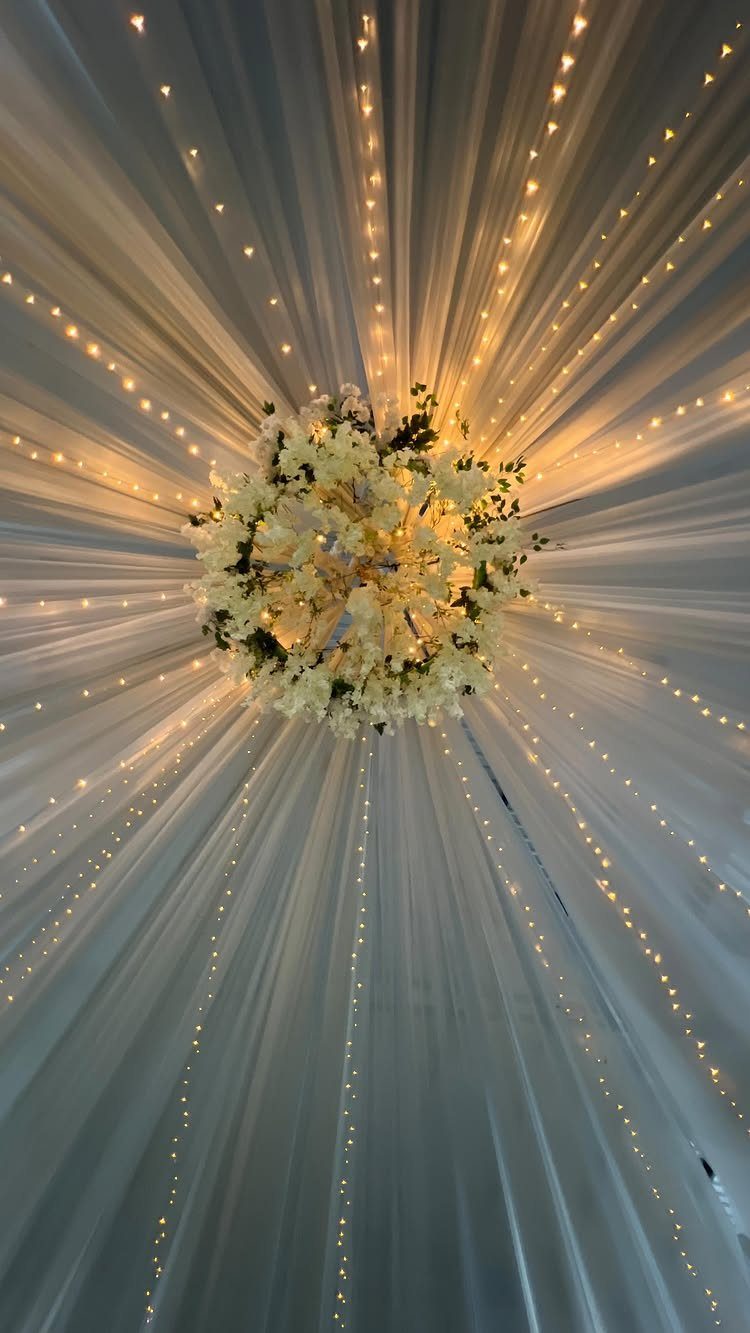
Sheer panels pulled taut from a single hub and spread to the walls turn a flat ceiling into a wide, petaled shape, with the centerpiece hanging where the stems would meet.
A floral arrangement at the center gives the eye somewhere to land, and warm fairy lights follow the fabric outward.
A light fixture works at the center too, if you would rather skip the flowers overhead. Fasten every panel to the same point, then pull each to its anchor at an even angle.
I’d string the lights along the panels, not across the gaps.
13. Rustic Barn Beam Drapes
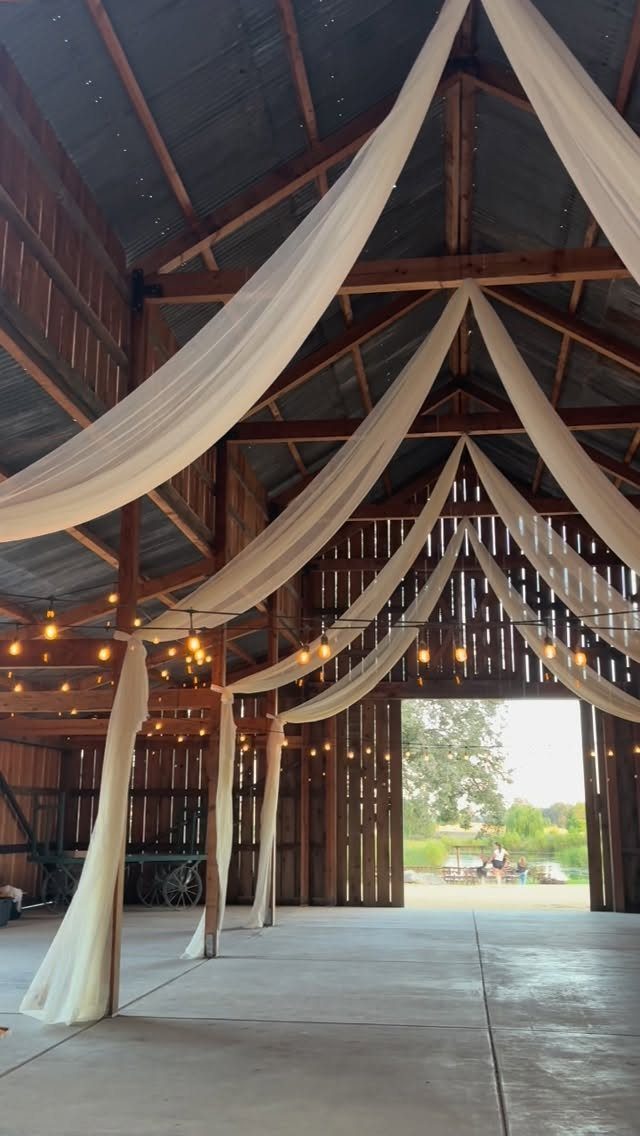
Exposed rafters already do the decorating, so the fabric only has to follow them.
Loop white fabric over the beams in wide, billowing swoops and let string lights hang below it, where they read against the pale cloth instead of the dark wood.
Keep the fabric light enough to drape without pulling. Hang the lights after the fabric is up, so you can set their drop where the swoops dip.
White against old wood is the pairing I’d choose, and I’d skip any second color.
14. Full Hallway Tunnel Draping
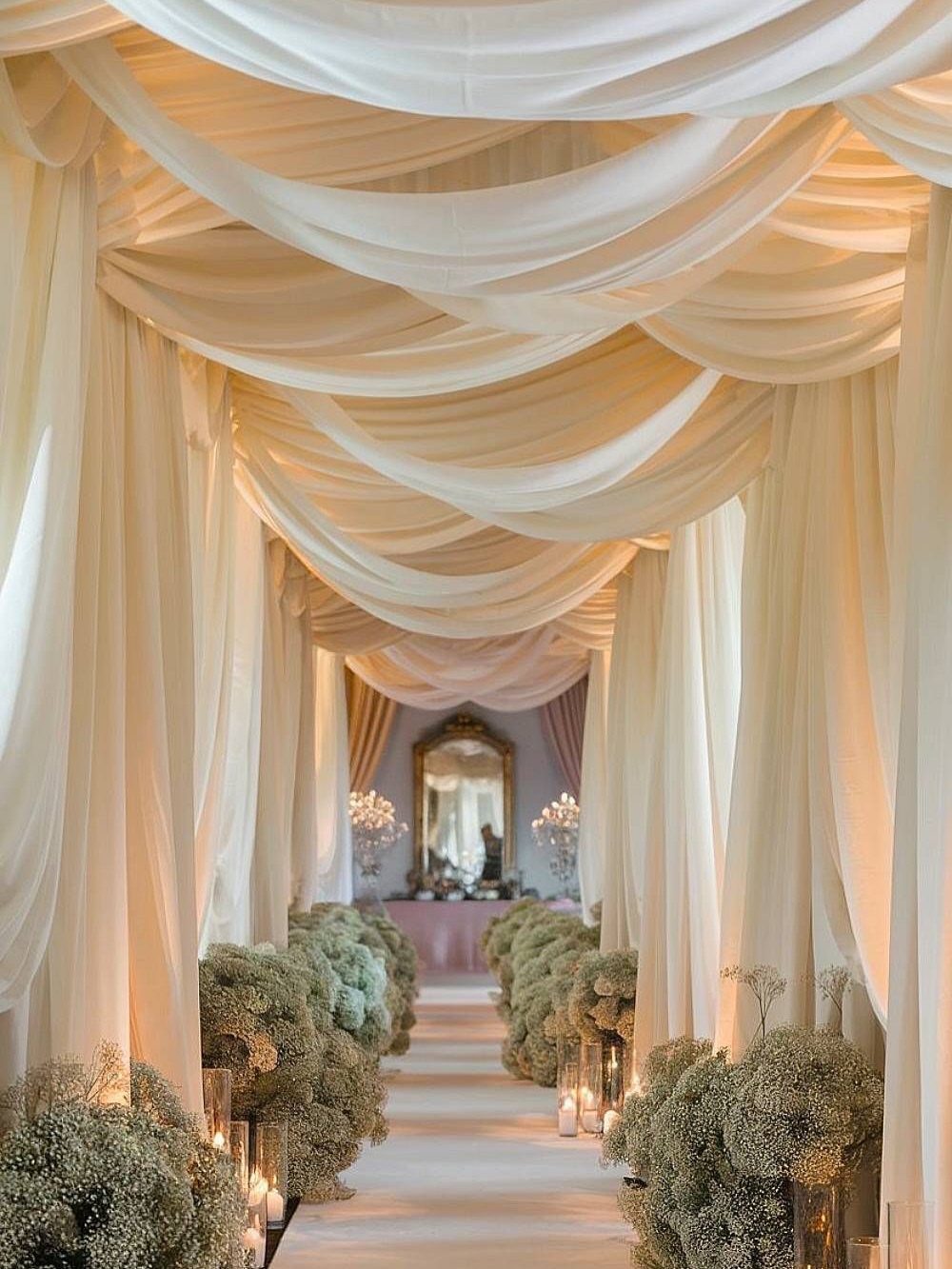
Cream fabric on both the ceiling and the walls turns a long aisle into a tunnel, with no bare surface left to compete. Candles and baby’s breath along the edges give the cloth something small and pale to sit against.
Run the fabric in one continuous piece from wall to ceiling to wall, so there are no seams at the corners. A mirror and table at the far end give the eye a place to land.
I’d pick cream over stark white here; in candlelight it looks warmer.
15. String Light Interwoven Draping
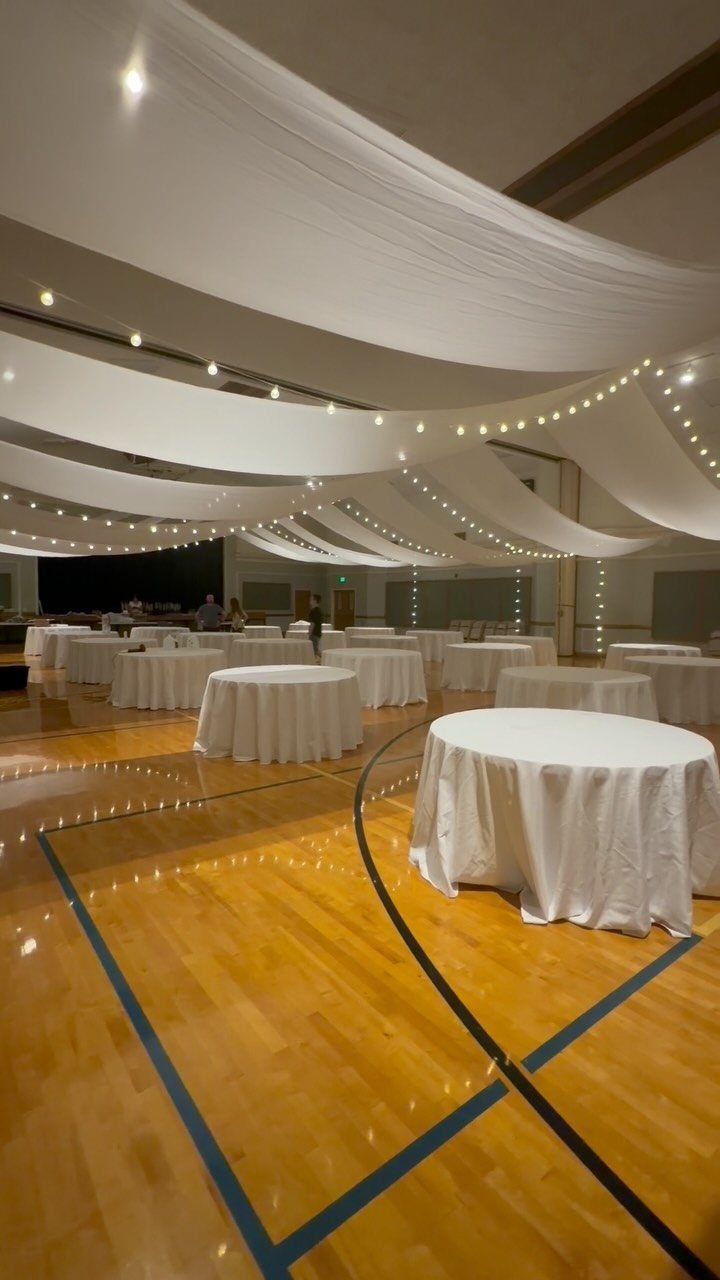
A gym ceiling is plain and high, and white drapes with fairy lights bring it down to table height.
Hang the fabric in swoops over the round tables, and let the lights run along it so each table sits under its own glow.
White linens below keep the look clean. Test the lights before the fabric goes up.
For a budget venue, this is the cheapest way I know to hide a ceiling.
16. Two-Tone Champagne Drapes
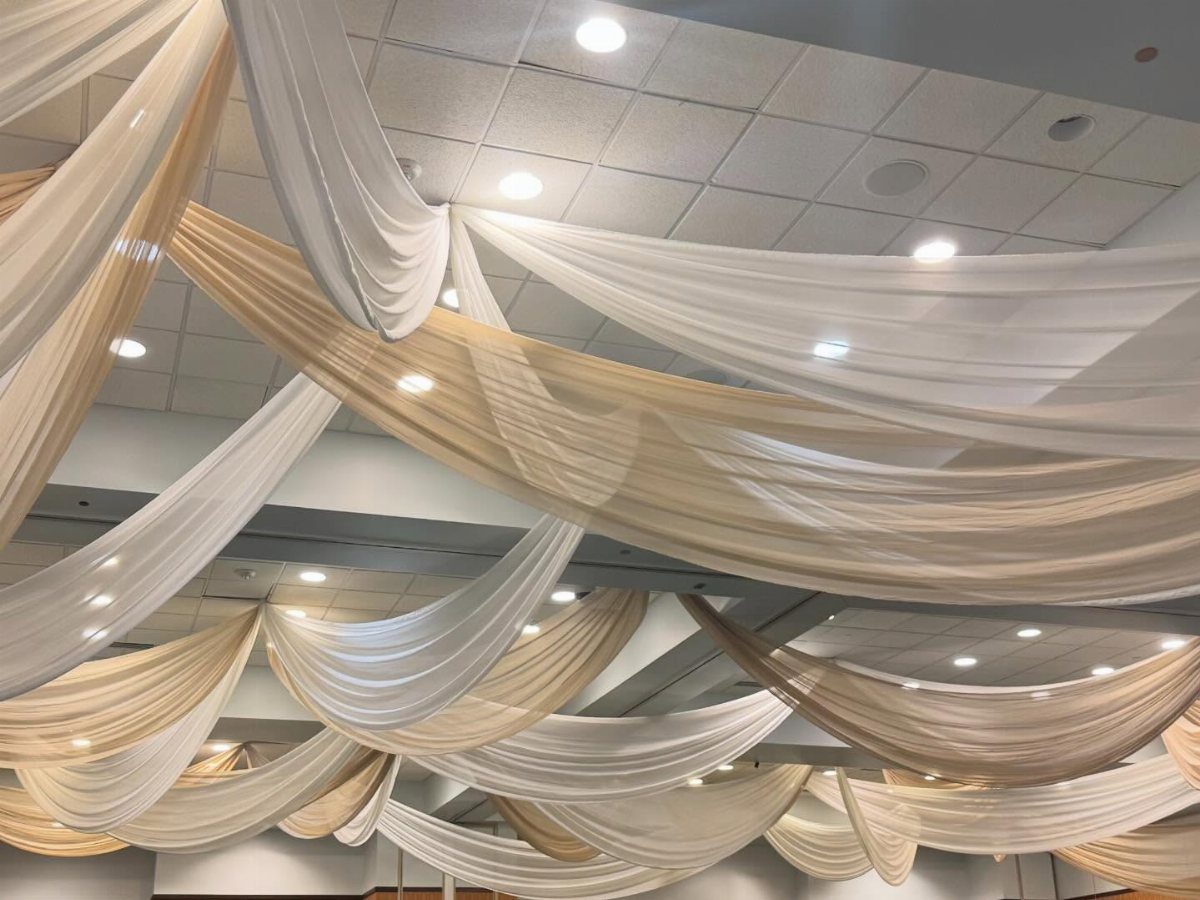
Alternating white and champagne panels give a flat tiled ceiling some rhythm without adding a loud color. Swoop each panel across the room in turn, so the 2 shades trade places.
Keep the champagne soft; a shade close to white blends, while a deeper one can start to look heavy against a white ceiling. Work around the recessed lights rather than covering them.
I’d keep the panels even in width, since the pattern depends on a steady beat.
17. Crisscross Sheer Swags
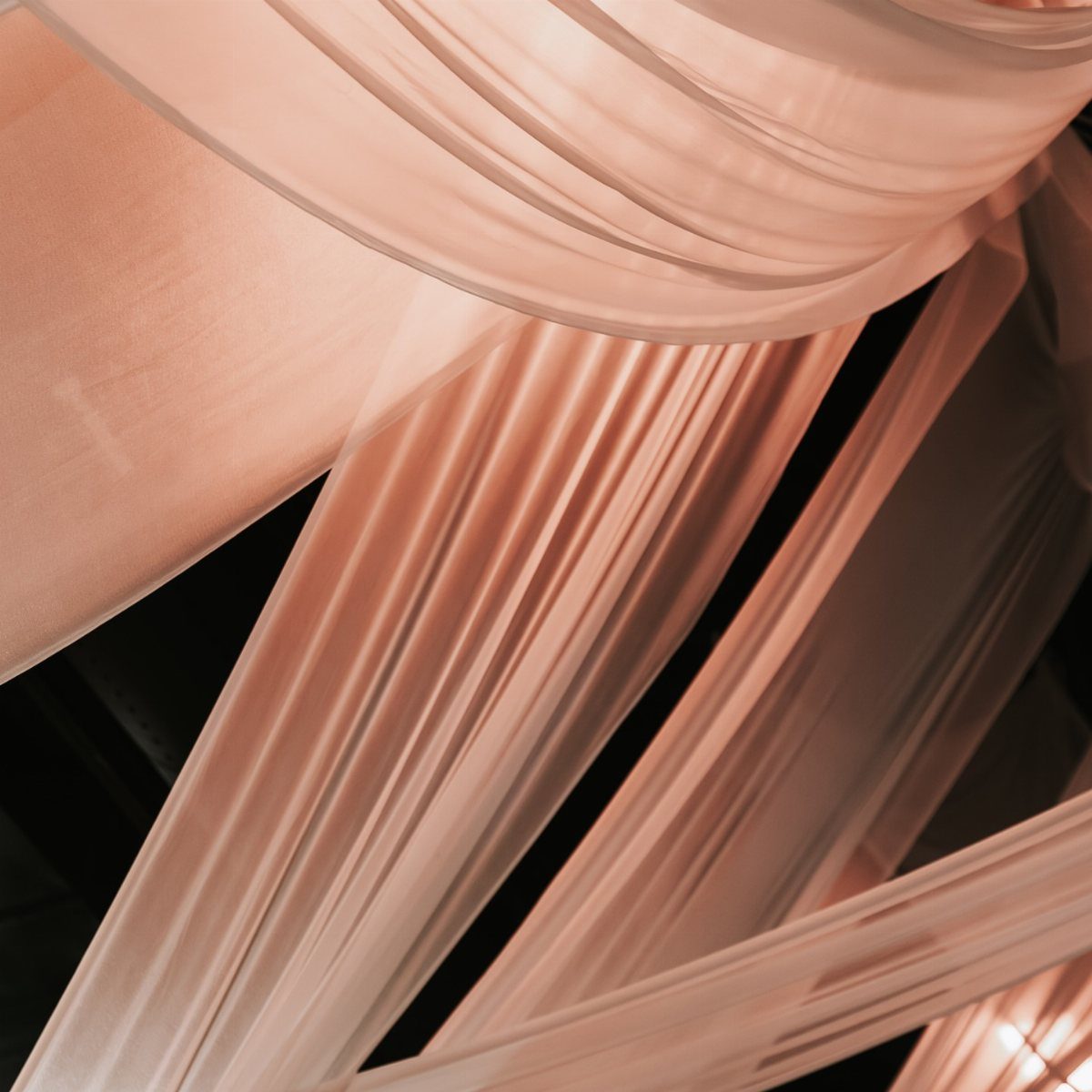
Layered sheer fabric, crossed over itself, makes a ceiling look deep. Hang each swag from two points, let it dip, and cross the next one over it so the folds overlap.
Sheer is the point: you see through one layer to the next. Against a dark ceiling, white or soft peach stands out most.
I’d use more layers rather than thicker fabric, and stagger the dips so the crossings don’t line up.
How to Hang Drapes for a Wedding
Proper hardware is what separates drapes that hold from drapes that sag by the end of the night.
A ceiling hook or ring at the center, plus an anchor at each panel’s far end, is the basic setup, and a hang kit usually bundles these pieces.
Fabric length matters before anything else. A single 2-pack gives you two panels at 5ft x 40ft each, so 10ft of coverage stretched to 40ft, a scale that fits ballroom ceilings and large reception halls.
For a living room or backyard party, measure first and buy shorter panels.
Check that every hook is rated for the weight before you climb the ladder.
Budget-friendly Draping Options
Sheer fabric is the cheapest route to a full ceiling, because it hangs well, and one pair of premium chiffon panels sold for wedding arch draping can cover a small frame. Buy fewer, longer panels before buying many short ones.
Renting a draping kit is the other shortcut. A kit saves you from buying hardware you will use once, and it removes the guesswork about what to hang from where.
Whichever route you take, price the whole job per guest, counting fabric, hooks and lights. If the total looks high, reduce the covered area and drape only above the tables or the aisle.
With 27 exquisite drapery ideas to inspire you, it’s clear that fabric can beautifully transform any wedding venue into a dreamy, personalized space. From enchanting ceiling cascades to romantic backdrops and intricate details like floral tiebacks, drapery exudes elegance, warmth, and timeless charm.
Choosing Fabric Types
Chiffon and organza are the easy choices for draping, since both are light enough to hang in soft curves without pulling on the hardware. Velvet adds luxury, but it is heavy, so use it only where the anchors are strong.
Shade changes the mood more than people expect. White reads bright and formal, ivory lands warmer, and off-white splits the difference if you want something softer than stark white but less cream than ivory.
I’d order a small swatch of each and hold them up in the room’s actual light before buying by the yard. Buy every panel from the same dye lot, since shades that look close online can look mismatched overhead.
Frequently Asked Questions
Where can I buy cheap draping fabric?
Local fabric stores and online retailers with discounts are the places to look.
Chiffon is where I’d start on a tight budget: it’s light, it falls in soft folds, and 2 panels sold as arch drapes can cover a small frame.
A rented draping kit can also save money, because the hooks, rods and clamps get used for one night and then sit in a closet.
What is a reasonable budget for wedding decor?
Budget varies widely, and a common guideline is 10–15% of the total wedding budget for decor. Add up fabric, hooks and lights, then divide by your guest count; that per-guest number tells you more than the total does.
When that number comes out too high, I’d cut the drape back to the area over the tables or the aisle and leave the rest of the ceiling bare.
How high from the ceiling should you hang drapes?
Hanging drapes about 1–2 feet from the ceiling is the usual guideline for the best look. Measure the ceiling before buying anything, since a cascade needs space to fall and a low room will bunch it up.
Anchor the panels at one center point with a ring or hook, then let them fall in even sections to each side.